The Ngorongoro crater has a reputation, and it is not entirely a kind one.
Ask among people who take safaris seriously and the same complaints come back. Too many vehicles. Too easy. A queue on the descent road before breakfast, and a dozen cars parked in a semicircle around every lion. There are guides now who will not take clients in at all. On a bad morning in July, I understand the argument completely.
But that complaint is about a season, not a place.
Go in May, when the long rains are loosening their grip and the peak traffic has not yet arrived, and the crater becomes something else entirely. This is the low season here. Fewer vehicles, lower rates, and a floor that looks nothing like the one in the photographs everybody has already seen.
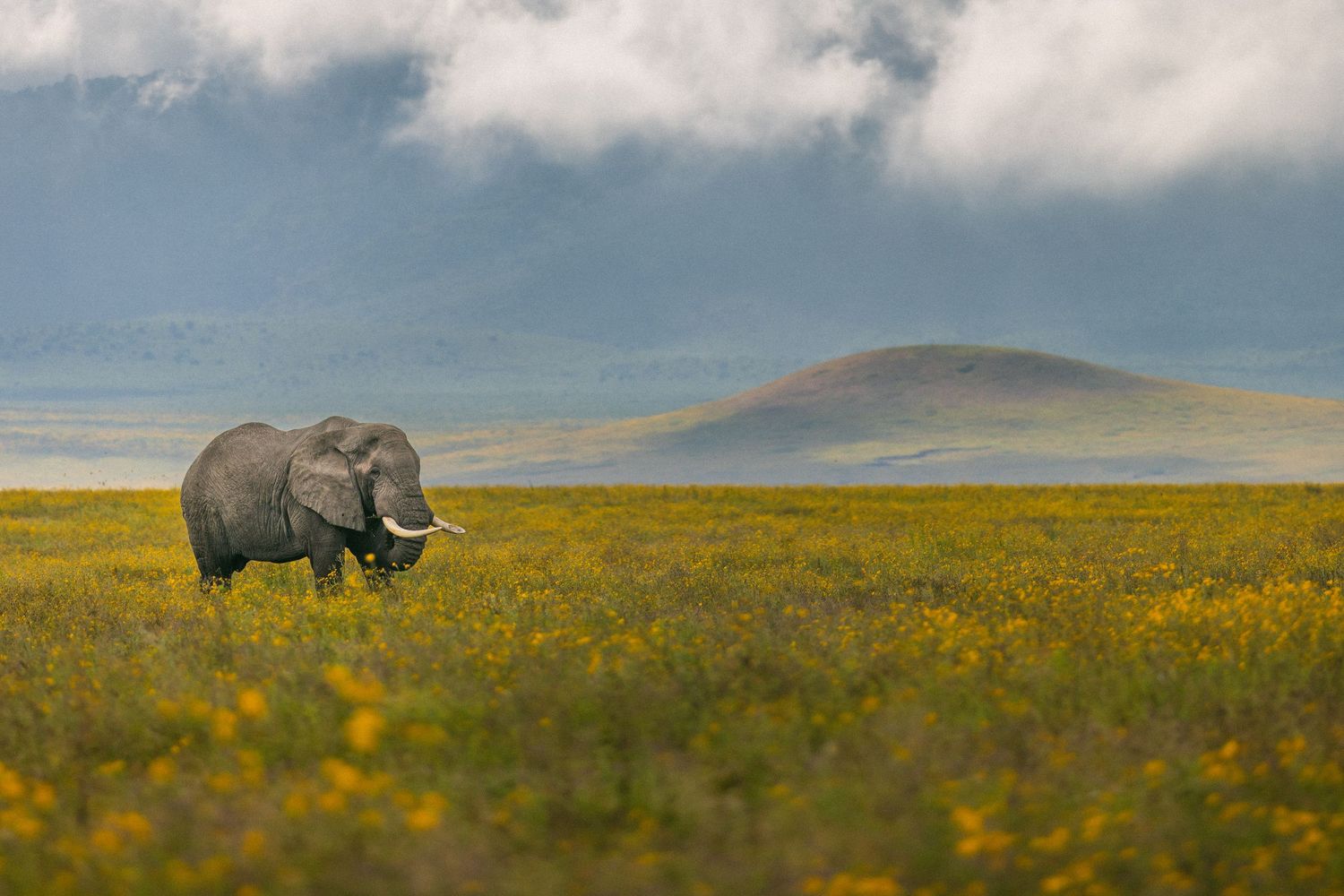
Because for a short stretch each year, the crater flowers.

Yellow, mostly, running out across the open ground in every direction, with purple holding on in the wetter pockets. Not the yellow of dry season, which is only grass that has given up. This is a living yellow, and it gets into everything. Every frame I made that week has it somewhere in the edges.
In my experience the window runs about three weeks, and the second and third weeks of May have been the best of it. Nobody can promise you that timing. It depends on rain that fell long before you booked.
We stayed three nights and two full days at The Highlands, high on the forested slopes of Olmoti, an extinct volcano north of the crater itself.
It is a strange-looking place, and I mean that as a compliment. Eight domes of canvas and glass, set on raised wooden platforms among the trees, drawing their shape from the Maasai bomas scattered across these hills. From the outside they look like something that landed here. From the inside, with the glass front filling with grassland and Maasai settlements and, on a clear day, the Gol Mountains and the plains running away toward the Serengeti.
There is no other camp anywhere near it. At almost three thousand metres the nights are genuinely cold, and each dome has a wood stove burning by the time you come back in the dark.


The drive down to the crater floor from up there is longer than it would be from a lodge near the descent road. I make that trade every time, and I will keep making it.

Part of the reason is the place itself. It is quiet. It sits close to a Maasai village. It is nowhere near the queue that forms at the gate each morning, and there is something to be said for starting a day away from that.


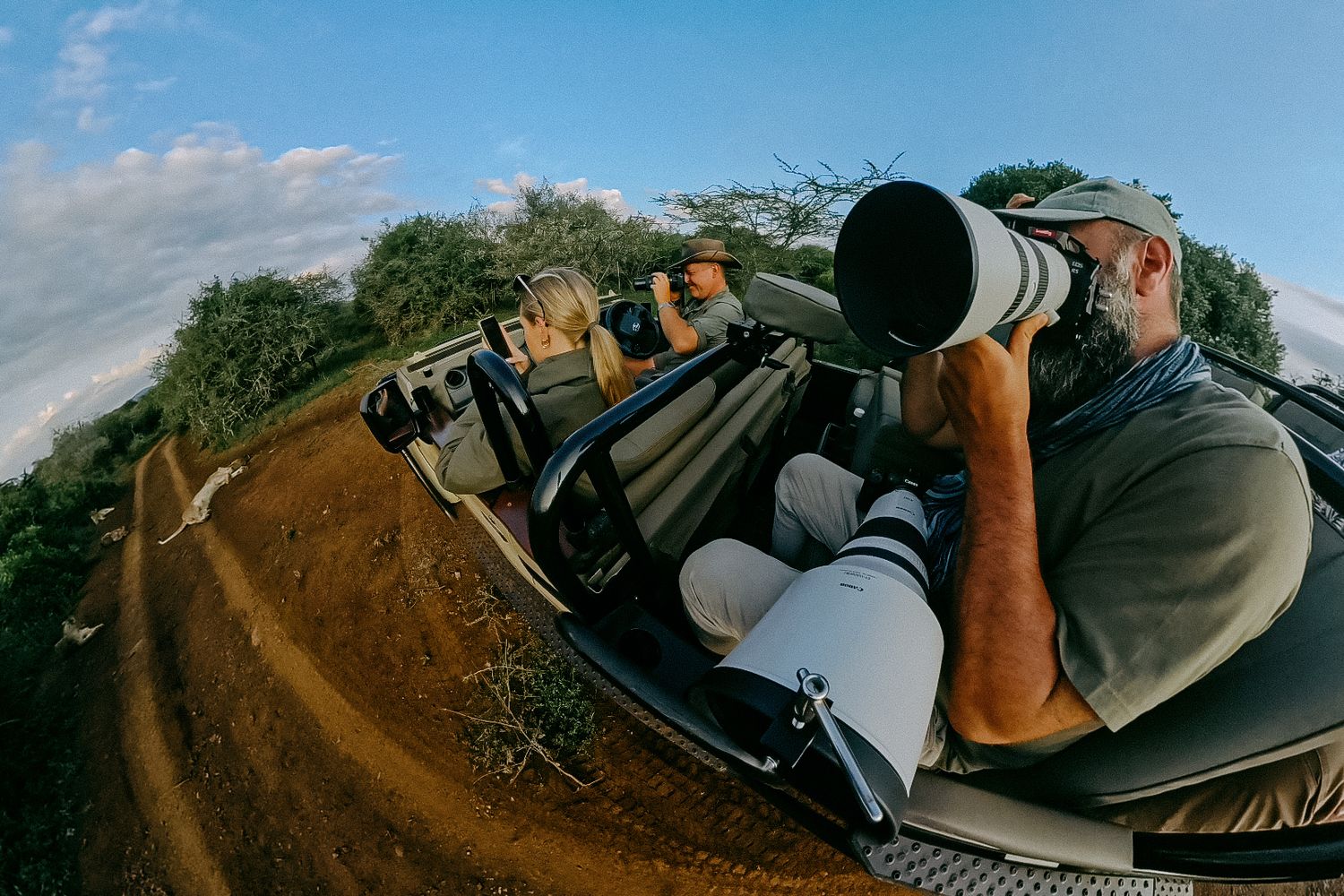
Most of it is the guiding. This is the part guests almost never weigh when they are choosing where to sleep, and it shapes a trip far more than the bed does. Guide quality varies enormously here from one lodge to the next. You can get lucky anywhere. You can also get a driver who knows the road and very little else. Asilia trains its guides to a standard I have found consistent, trip after trip and year after year, and a guide who reads the crater floor properly will find you things another one drives straight past.
Then there is the light, and I should be honest about it.
Forget golden hour. You are on the equator, at the bottom of a bowl. The sun does not creep in at a low angle and slide back out again. It comes up, it goes hard, and it stays hard. For much of the day you are working in bright, contrasty light that no photography book would recommend.


And then the weather does something.
In a single day the crater can move from open sky, to cloud flattening everything, to ten minutes of rain, to a wall of dark weather standing behind a foreground still lit by the sun. Put a carpet of yellow flowers under that and you have frames you could not have planned and will not be handed twice.


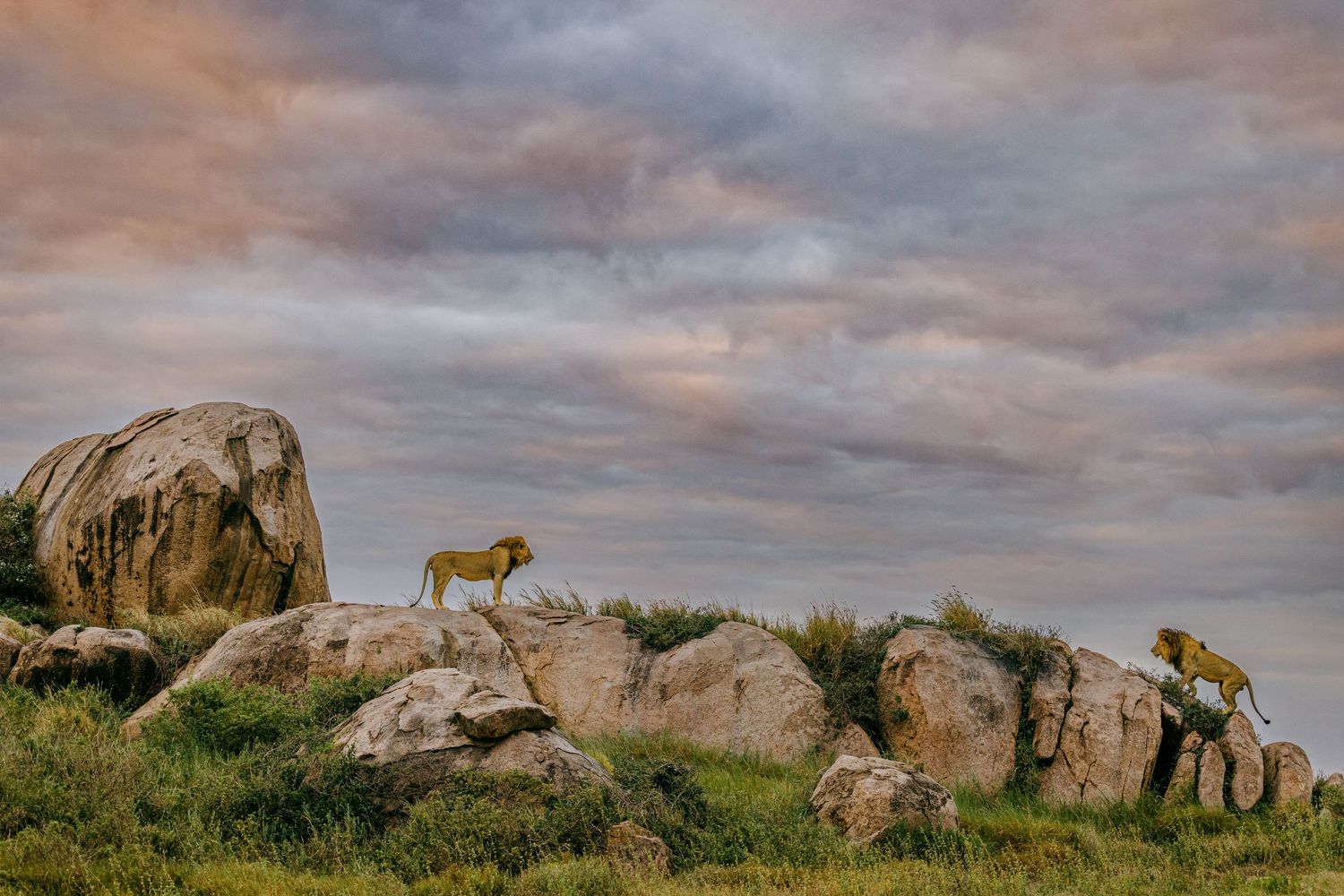
Aside from a couple of forested pockets the floor is open, the animals are out in it, and you do not have to drive far. Zebra. Wildebeest. Buffalo standing in shallow water. Elephant. Hyena working the edges of a kill. An ostrich walking through the yellow as though it had been placed there. Serval twice, which is more than I usually manage anywhere.
And a black rhino, out in the flowers.

The crater is one of the few places left in Africa where you can reasonably expect to see one. Most people who find a rhino here find it as a grey shape at distance, through heat haze, with a line of vehicles alongside them. We had it standing in a field of yellow, and I do not expect to photograph that again.


So the complaints about Ngorongoro are fair, and I would not argue with a single one of them. In July.
Go in the last weeks of May and you get a different crater: quieter, stranger, harder to photograph, and briefly covered in flowers that will be gone before the high season arrives to complain about it.
If you would like to join us on our next trip to the Ngorongoro Crater and the Serengeti, I would be glad to hear from you.