Everything in my kit bag, and a few things that took years to figure out.
Packing for a safari is one of those things that looks simple until you are standing at the check-in counter, your bag is four kilograms over the limit, and you are trying to remember if you actually need the 85mm or if you just like the idea of having it.
I always pack a few days before I leave. Not because I am organised by nature, because I once got all the way to the airport and realised I had left the microSD card for my Insta360 at home. The airport shop saved me that day. Lesson learned.
Here is everything I bring. And a few things I don't anymore.
Two bags
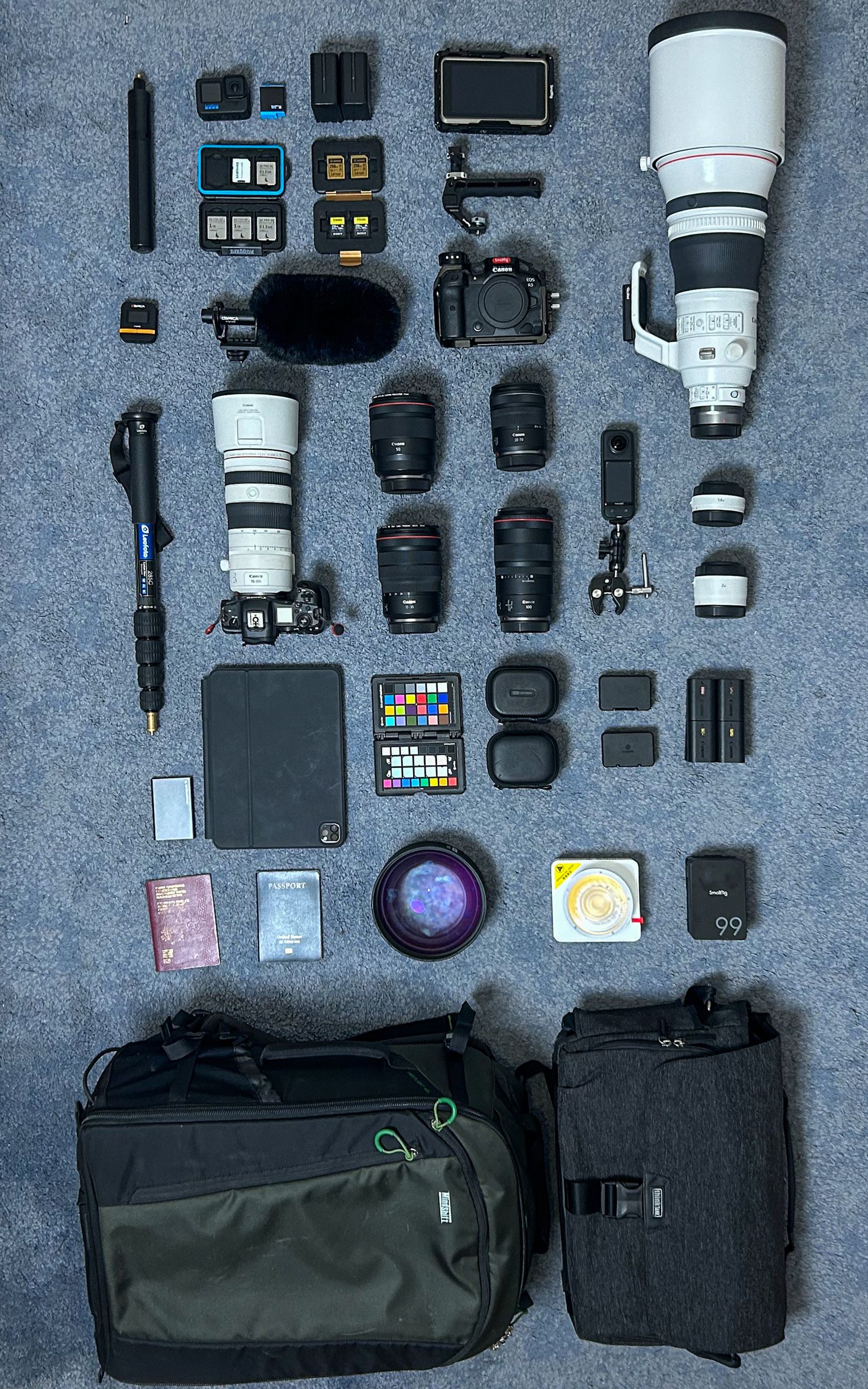
The MindShift FirstLight 40L is the workhorse, it can carry the RF400mm and fits the overhead luguage compartment. The Vision 15 is my personal item, the bag I can reach on the plane without disturbing everyone around me, where I put my Ipad and my noise canceling headphones and it goes in the vehicle with me every day. Everything I might need between now and sunset lives in there.
When I am flying between locations, I always split my memory cards between both bags. If one gets lost or delayed, the images won't be gone forever. It has never happened but I still do it every time.
I also put AirTags in both bags, on my cameras, and on the 400mm. If something goes missing I want to know exactly where it is. At that price point it is the cheapest insurance you will ever buy.
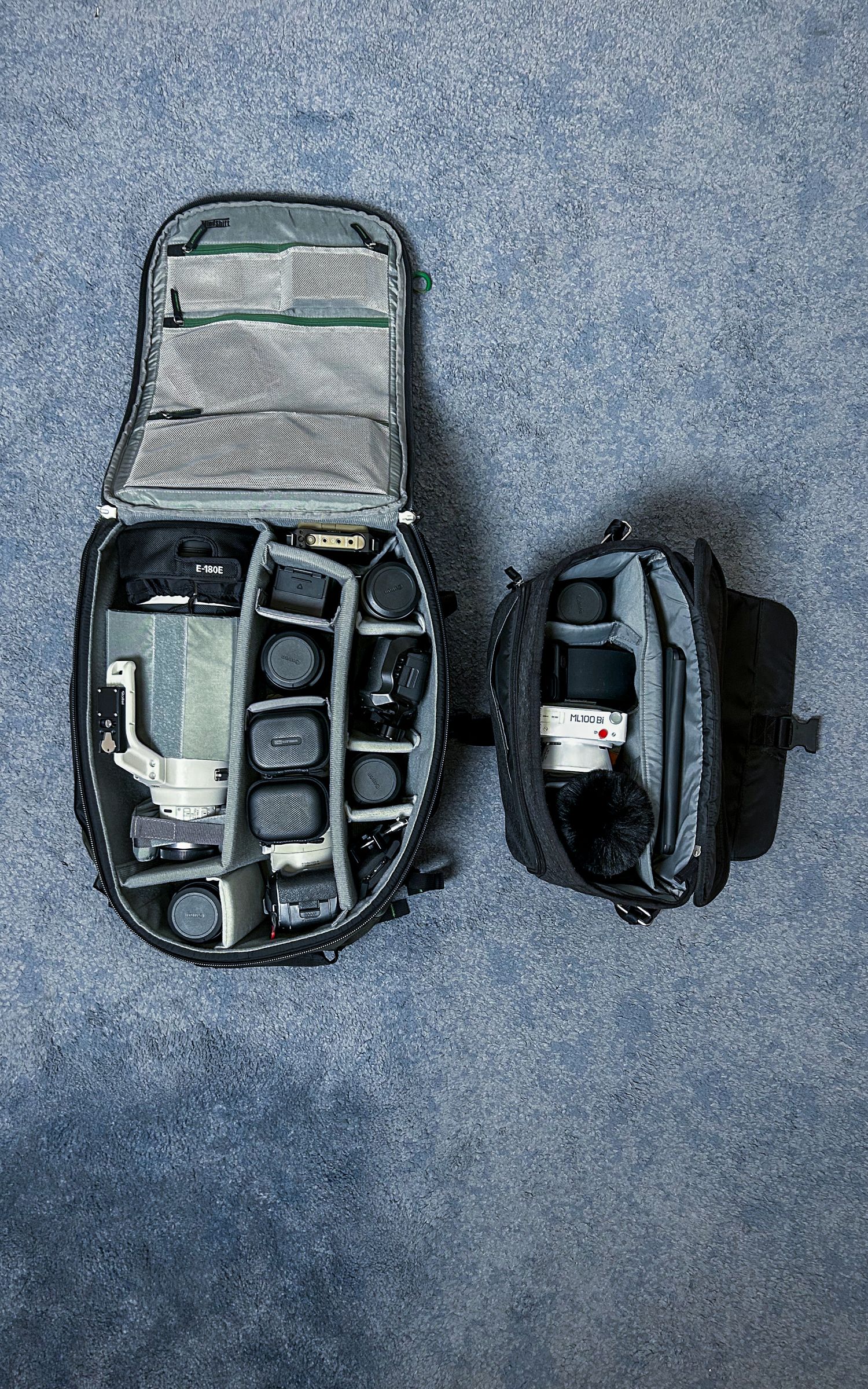
The cameras
Two Canon EOS R5 bodies. Always two, not just as backup, but because switching bodies mid-scene is faster than switching lenses, especially when there is dust everywhere. One stays on the 400mm. On the other, I rotate lenses.
The RF 400mm f/2.8 is the lens I built this kit around. Just over three kilograms with the hood, making it manageable handheld, though I always prefer a beanbag or monopod. The f/2.8 aperture is everything in low light, I has a lightning fast AF, is razor sharp wide open and the f/2.8 aperture with is close focus capabilities creates great separation with the background or foreground.
Add the 2× teleconverter and you have a sharp 800mm f/5.6 wide open.
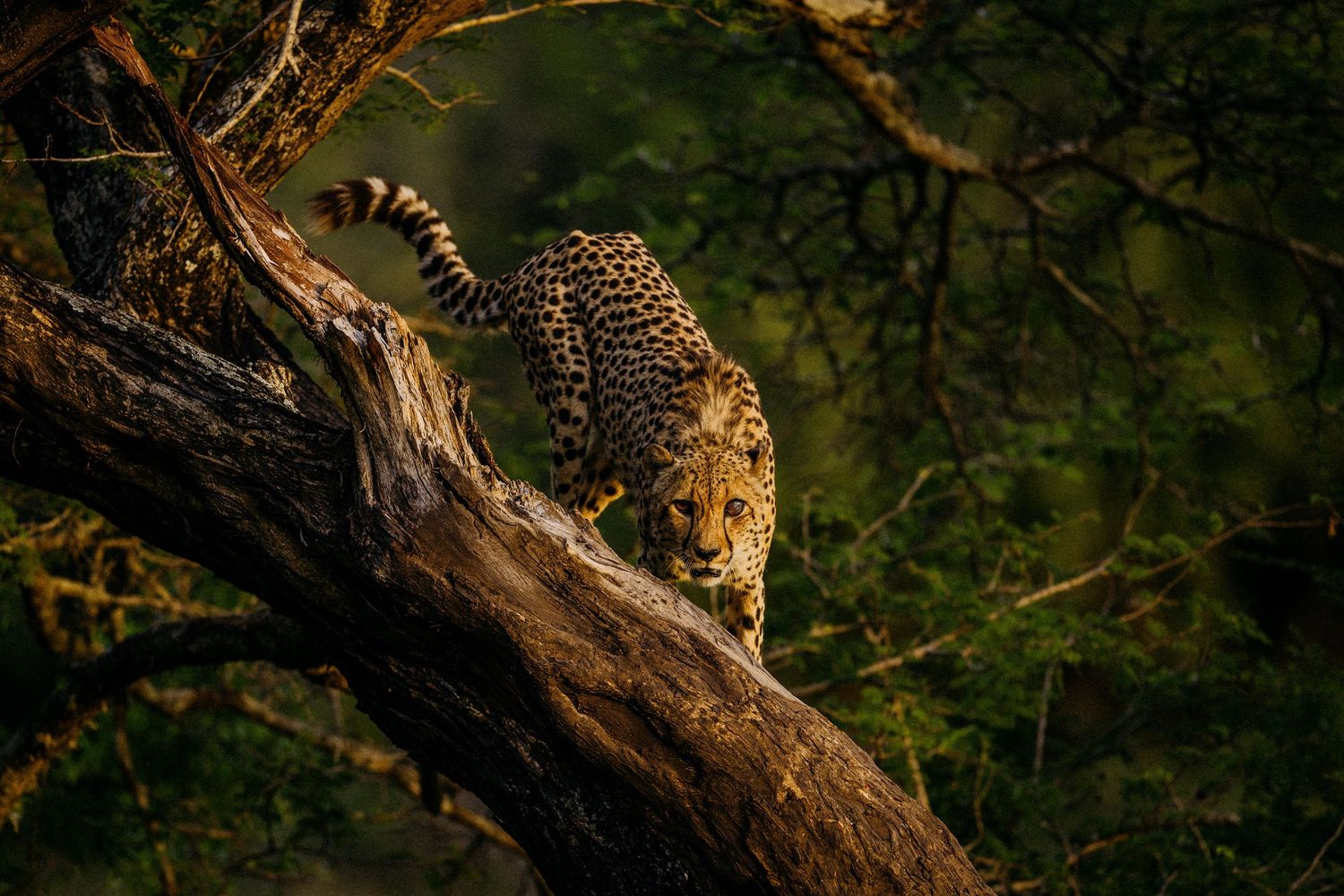
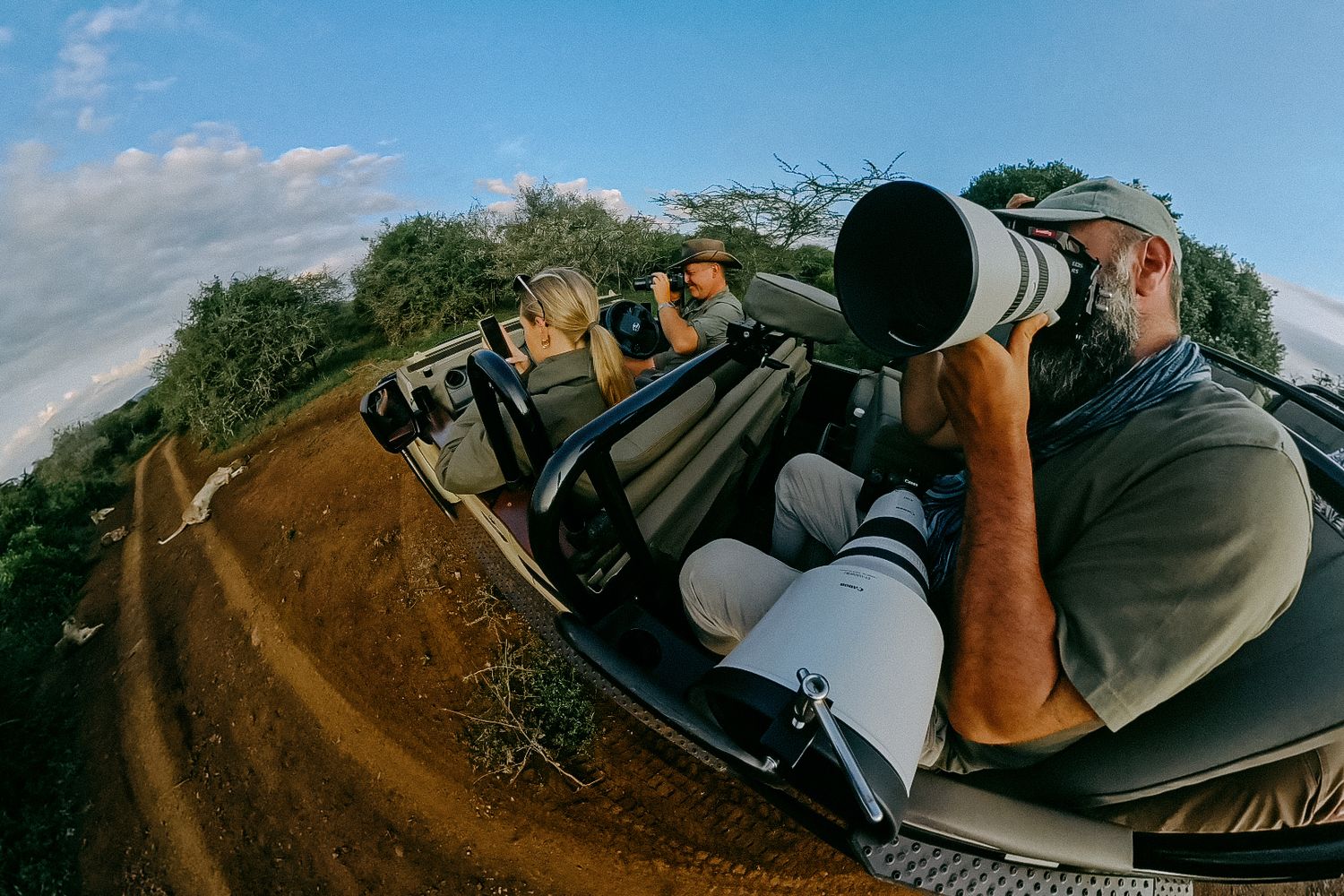
One thing I keep working around: getting the camera low. Below the animal's eyeline. When you shoot slightly upward, the animal dominates the frame the way it should.
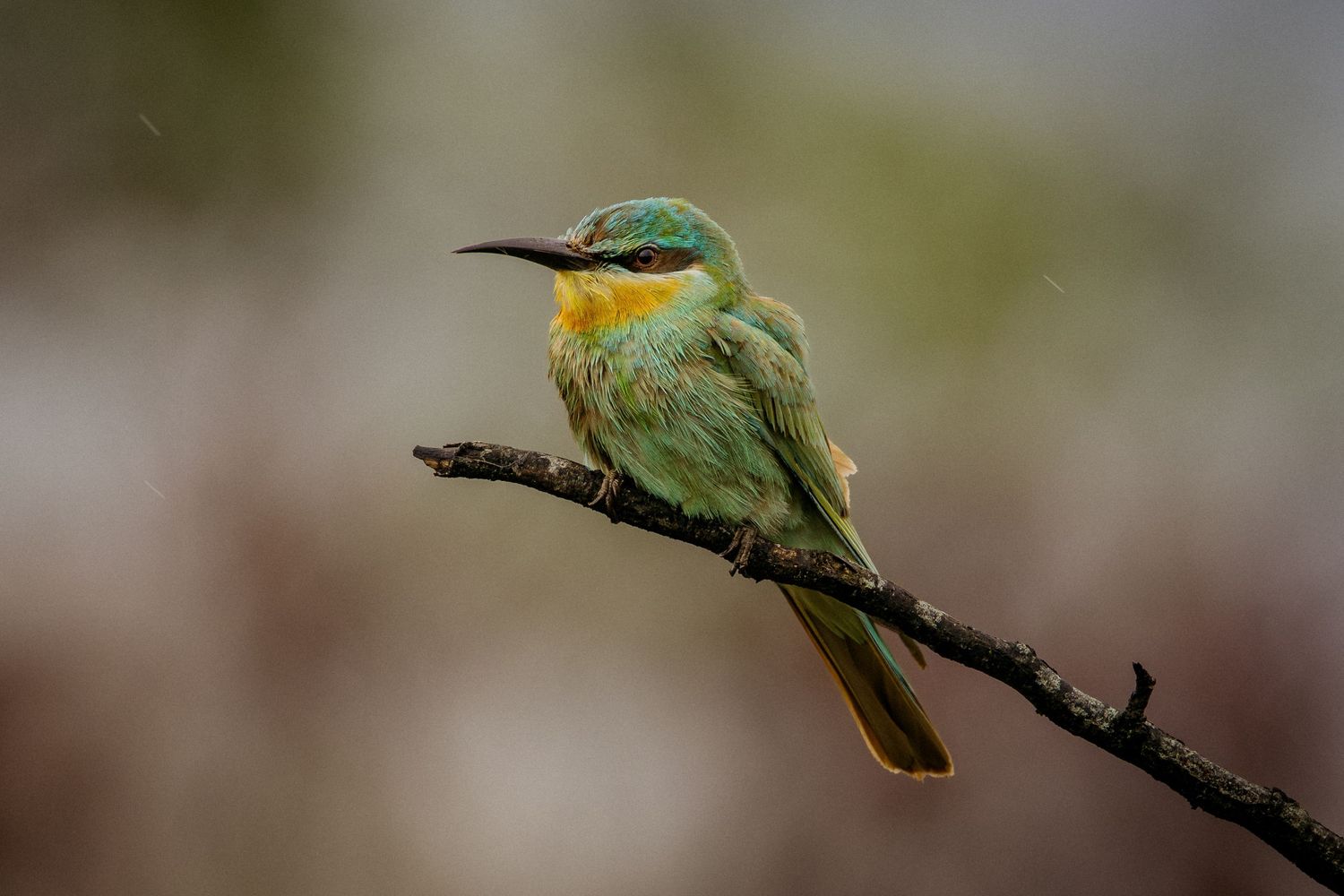
800 mm ( RF400mm F2.8 L IS USM + EXTENDER RF2x )
The RF 70–200mm f/2.8 L IS USM Z is probably my most used lens after the 400mm. Elephants at the waterhole, lions at medium range, anything where the 400mm is too much and the wider lenses are not enough. I reach for it constantly. It also takes the 1.4× and 2× extenders without losing any sharpness, something the first version couldn't do.
The RF 28–70mm f/2.8 goes on the second body when I want the landscape around the animal, the context that makes the subject make sense. Its weight and compactness also make it a great alternative to the RF 24–70mm f/2.8 if you are looking to travel lighter.
The RF 15–35mm f/2.8 comes out when 28mm is not wide enough, when bigger game gets really close, or when I want to let the landscape do the talking.
Despite its weight, the RF 50mm f/1.2 makes every trip. For low light portraits and that creamy background on close subjects it is genuinely hard to beat. In practice I rarely reach for it, there is rarely time or opportunity. It stays in the bag more out of love than logic. I keep bringing it anyway.
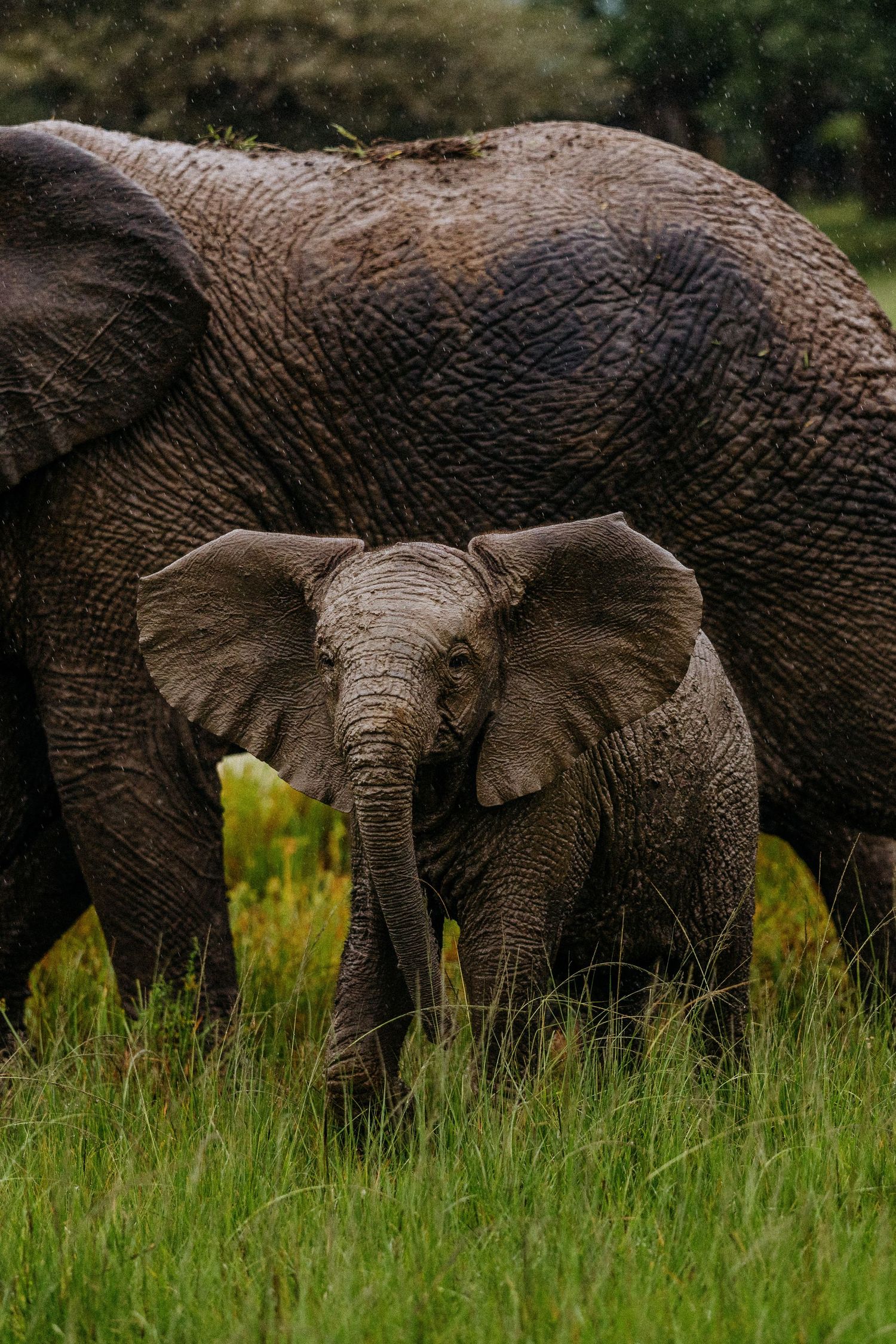
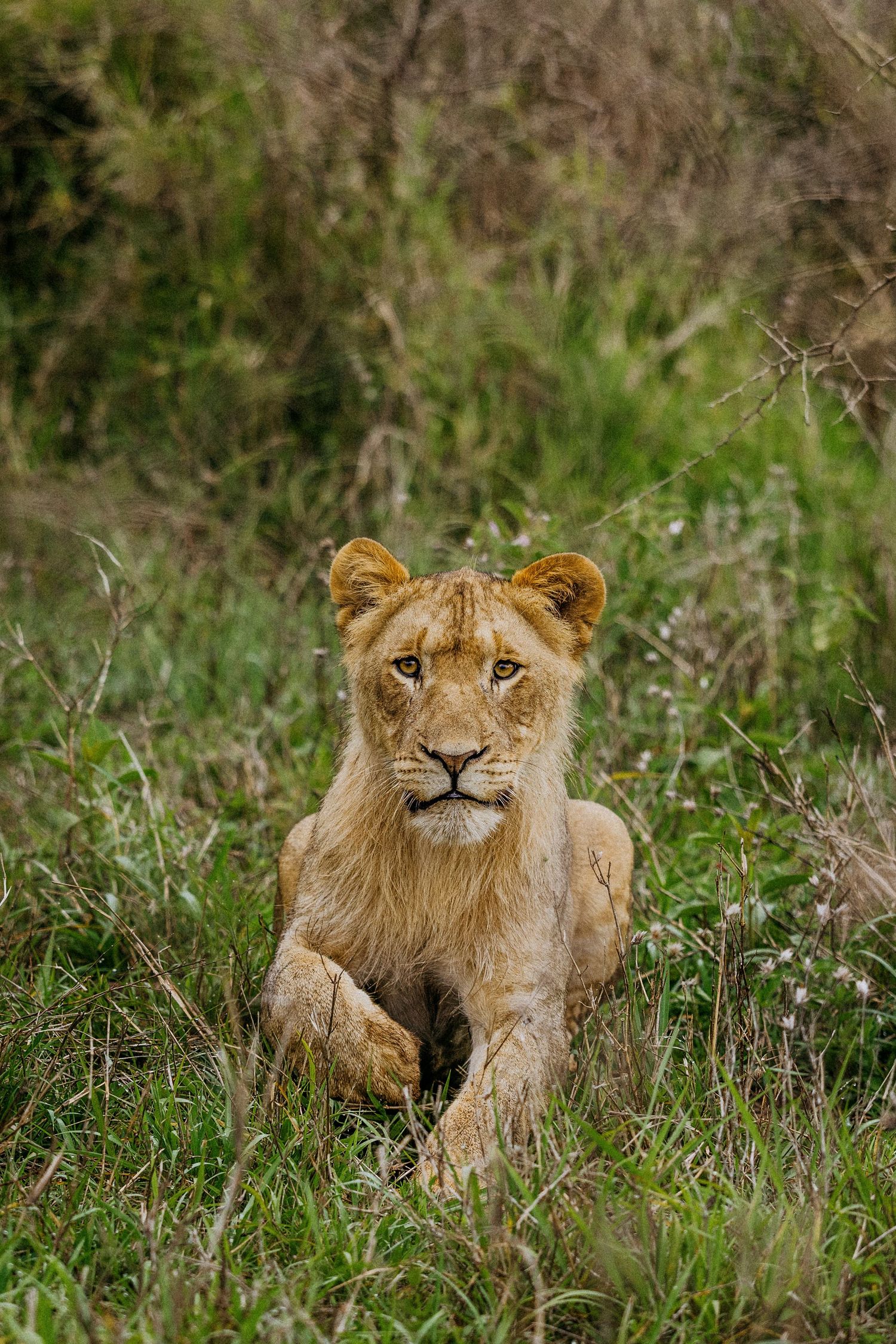
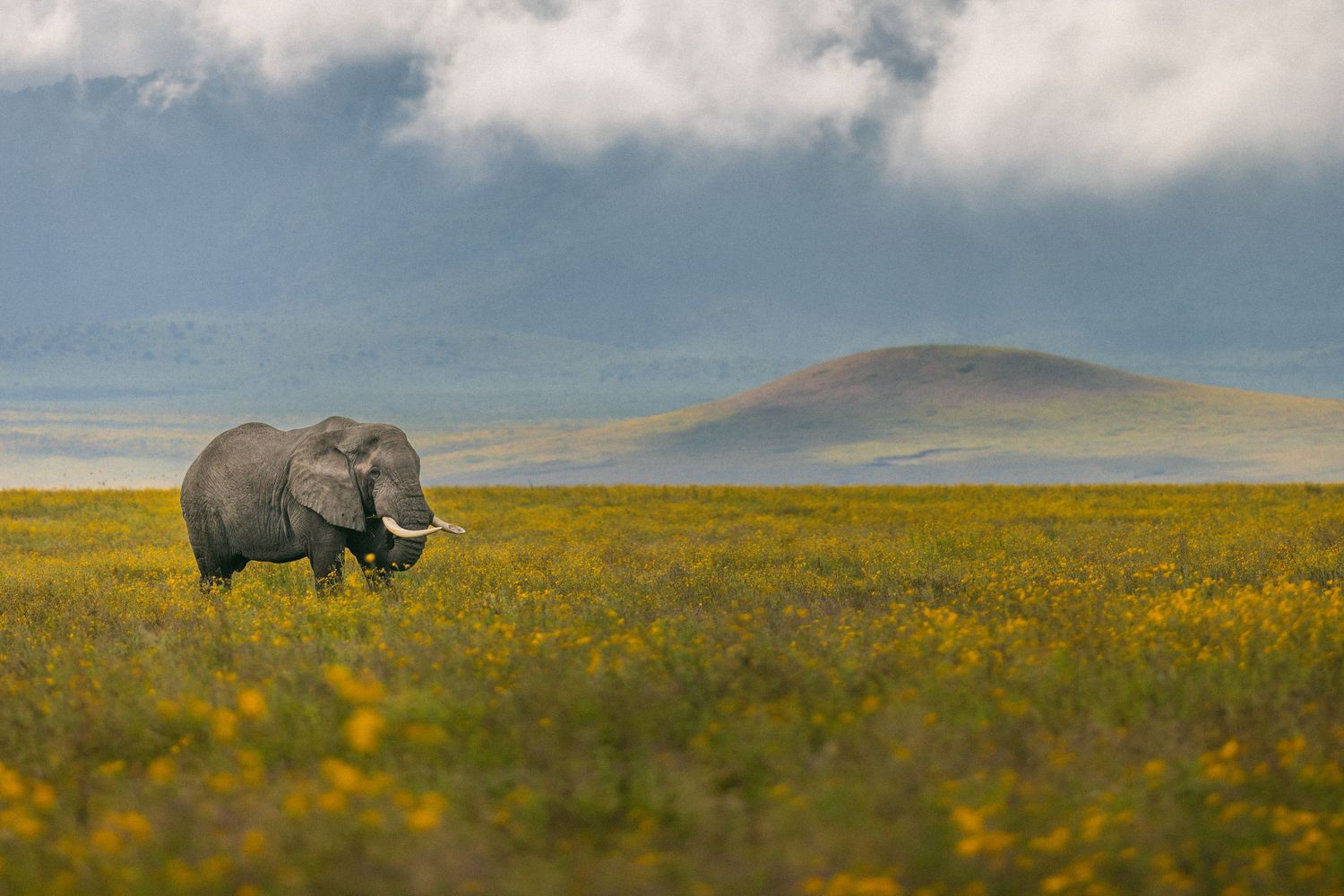
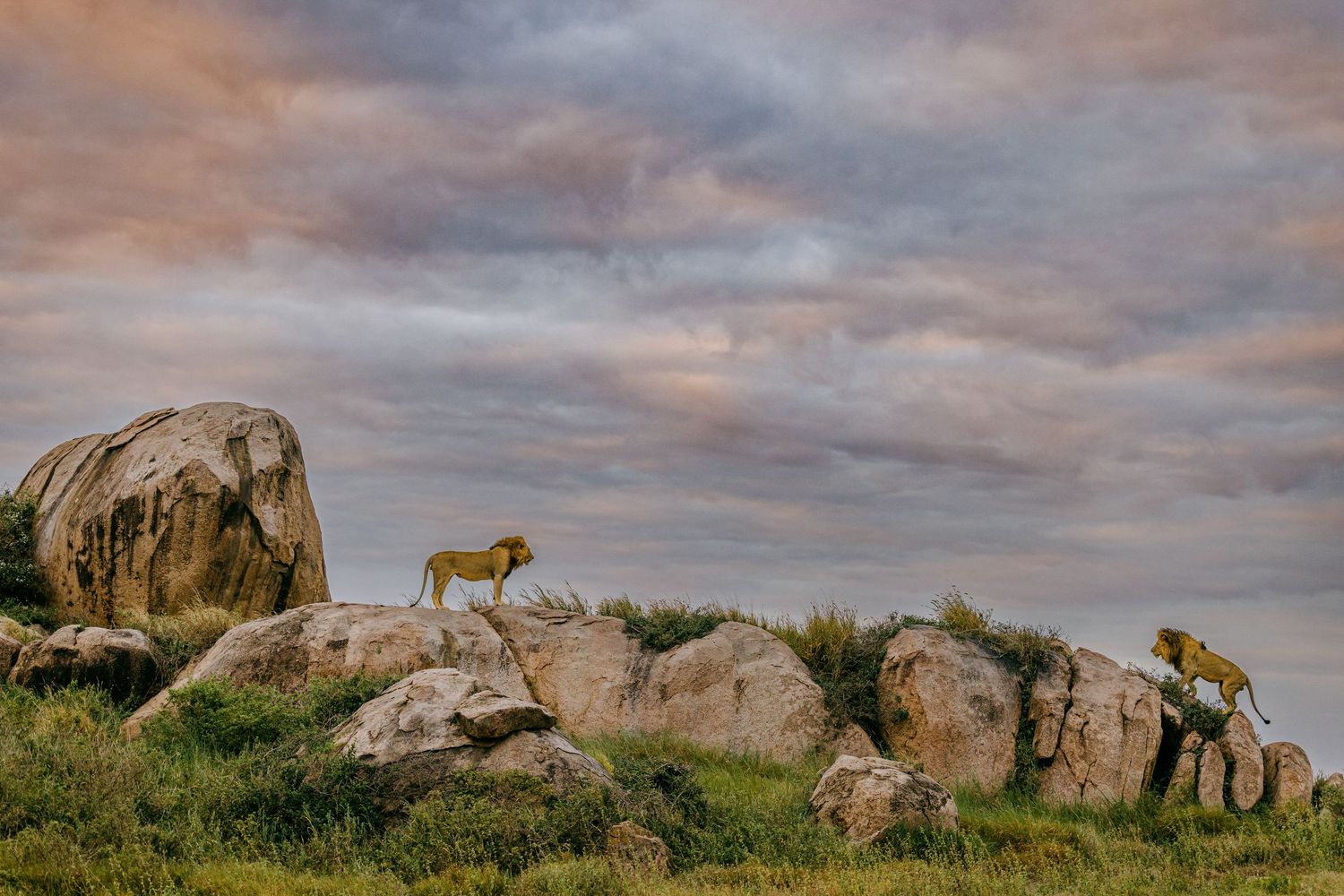
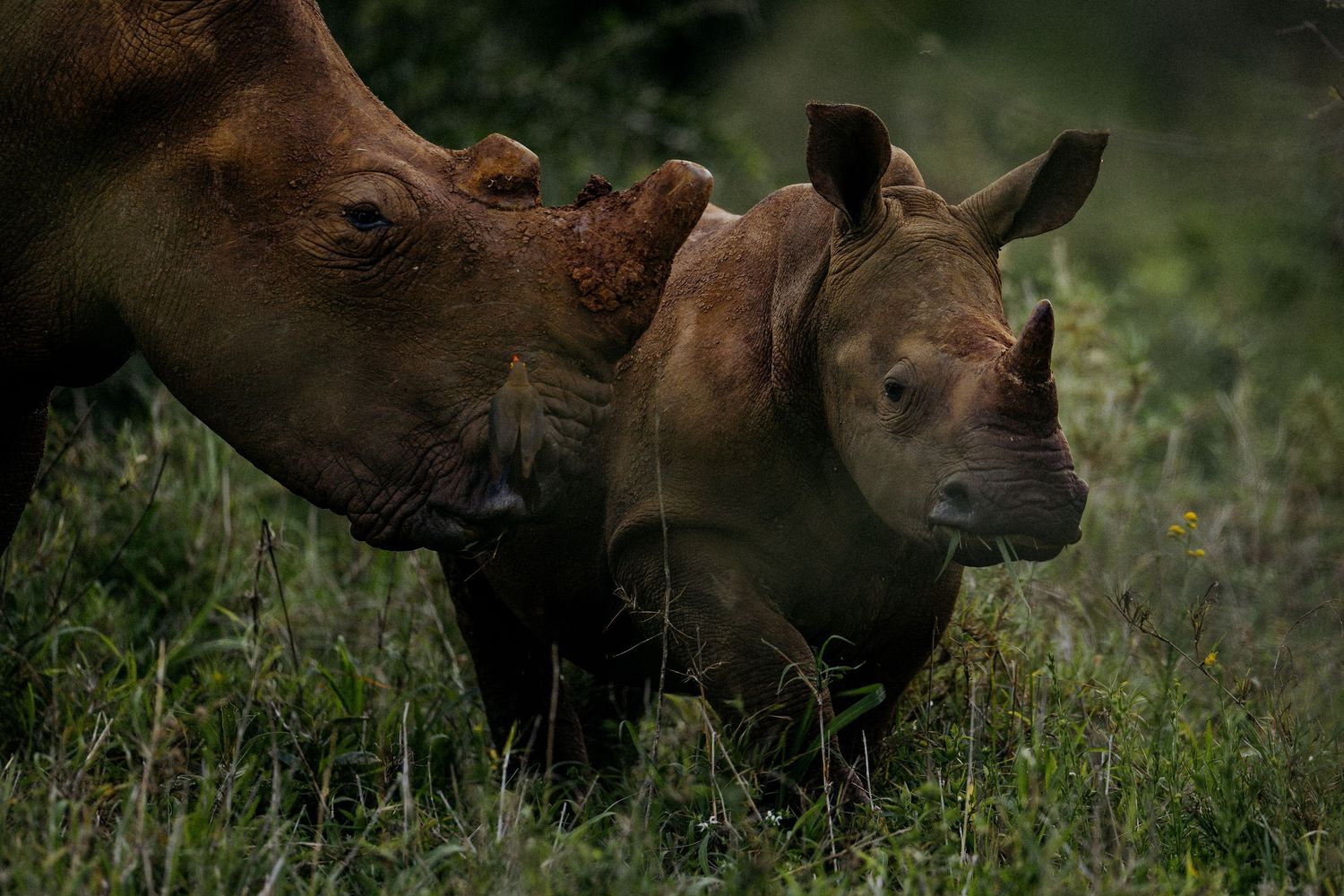
Both images shot with the RF70-200mm f2.8 L IS USM Z
Video
I love making short movies clips as much as photographs, and more and more clients want both. The Atomos Ninja Ultra with my Canon R5, captures 5K60p ProRes RAW. The latitude from RAW files in the extreme contrast of African light or in low light situation, is worth every gigabyte.
The Insta360 X4 goes straight onto the hood of the 400mm with a SmallRig clamp, it captures everything happening around me as I shoot in a way nothing else can replicate.
For audio: a Comica microphone for ambient sound. Most photographers seriously underestimate how much audio matters. Bad sound ruins good footage every time.
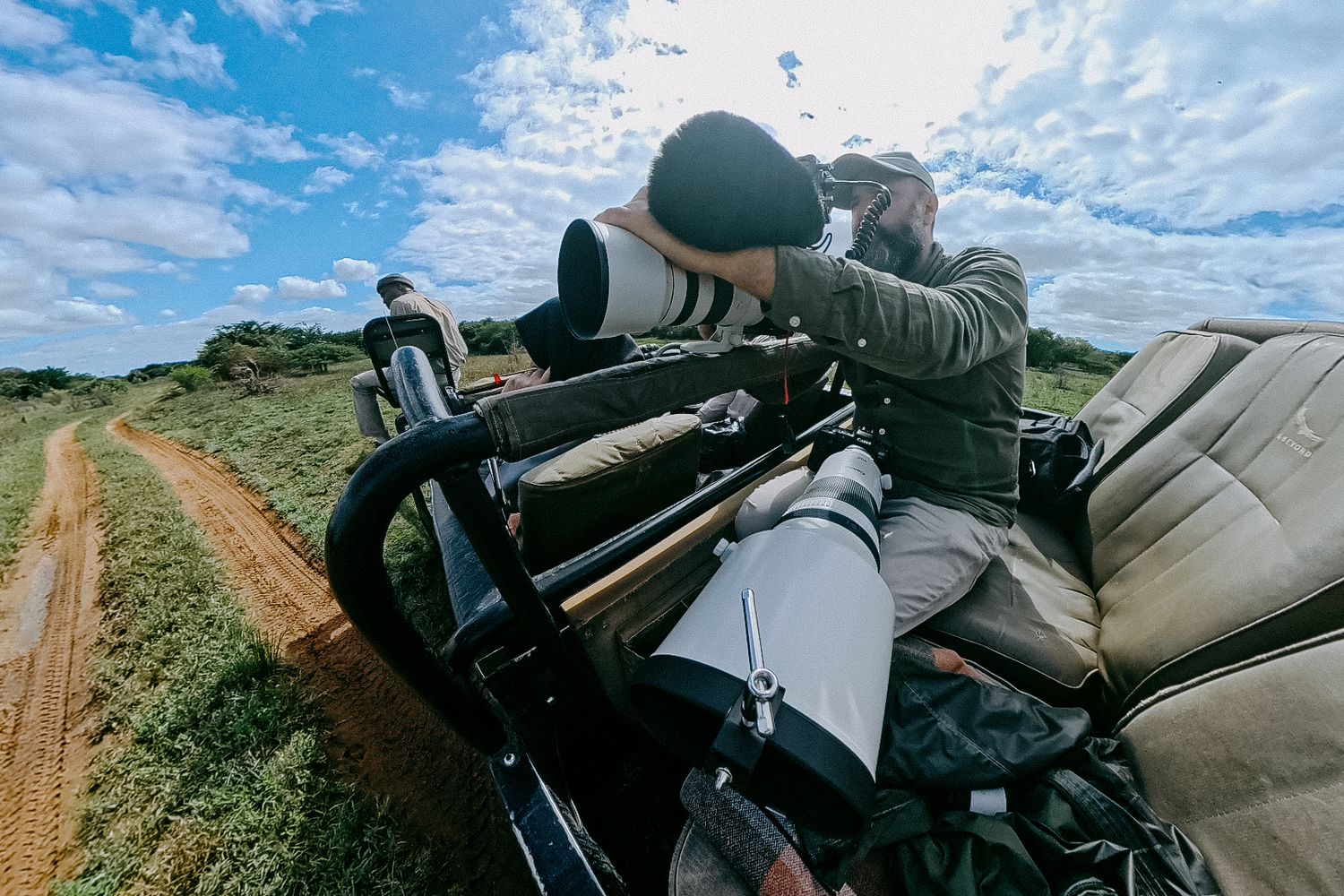
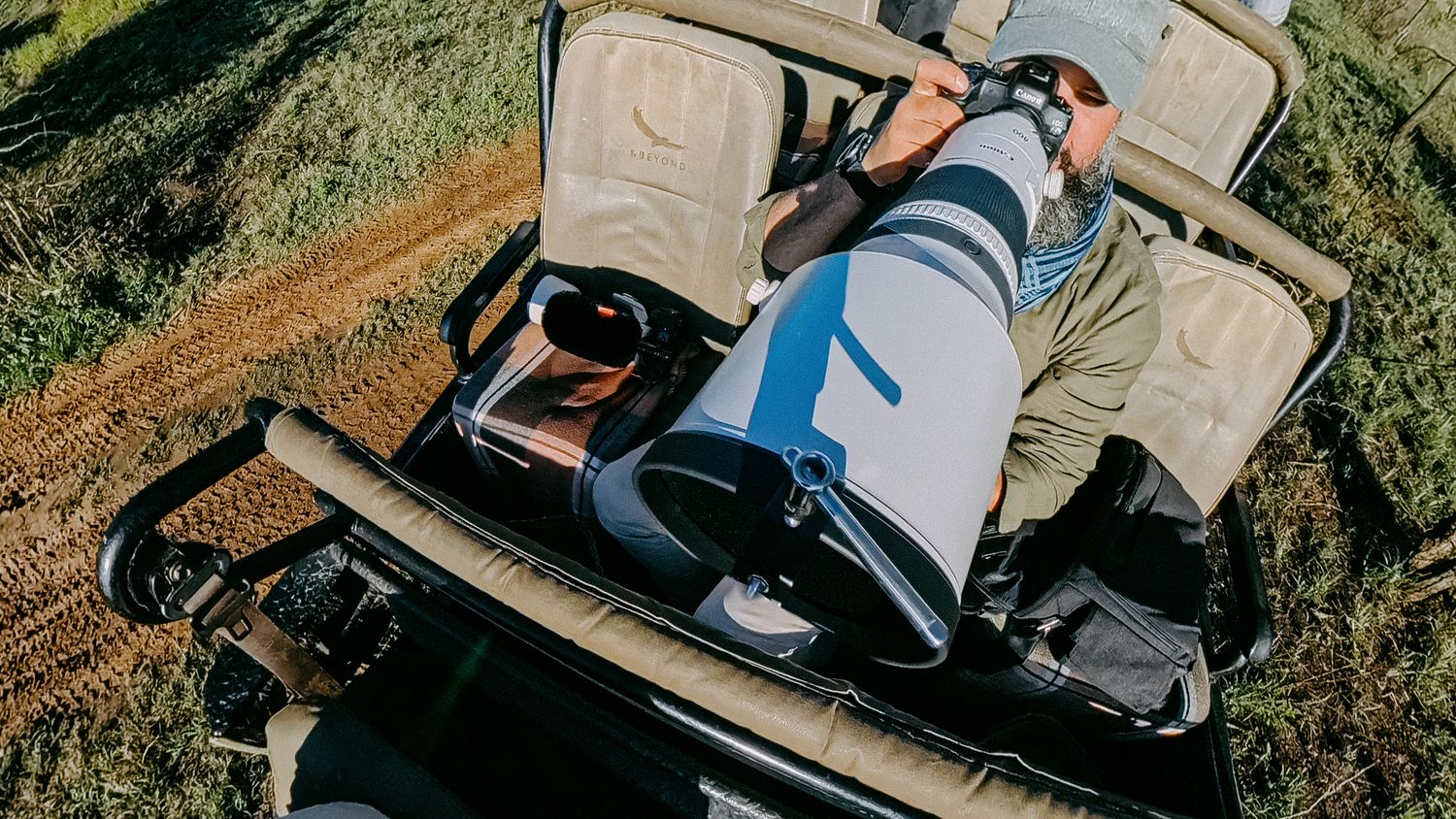
Storage
Four Angelbird CFexpress Type B cards, two at 1TB, two at 512GB. Eight Lexar and Sony SDXC cards for secondary slots and Micro SD for the action cameras.
I shoot dual slot so every image has an immediate backup. In the evening I do a quick cull on my phone. The serious editing waits until I am home.
Power
At least eight Canon LP-E6NH batteries. A SmallRig V-Mount for extended video and the Godox light. Spares for the GoPro and Insta360. All chargers and cables go in checked luggage as the carry-on space is too valuable.
Lighting
A Godox ML100Bi and ML-CFL15 for destinations where night drives are permitted. The vehicle spotlight has better reach, but the quality of light from the Godox with a Fresnel attachment is in a completely different league, especially for video.
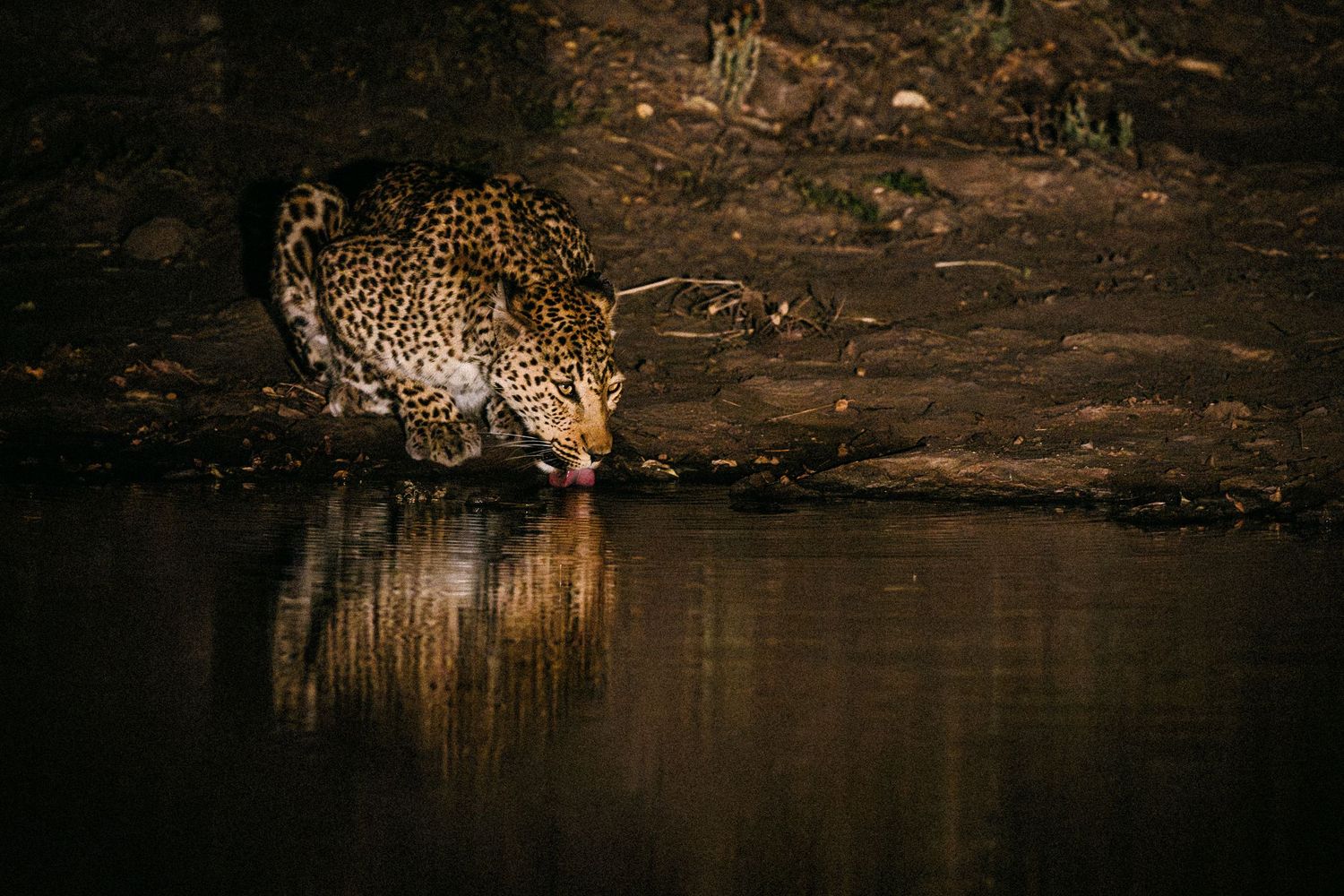
What I leave behind
This is the part that took the longest to figure out.
Extra prime lenses. I used to travel with a 35mm, a 16mm, an 85mm. Loved them all. Rarely used them. Extra glass is extra weight, and weight is a decision every time you pick up the bag.
A third camera body. It felt safer once. Now it just feels like weight for a problem that has never happened.
The pressure to come back with a specific shot. I used to arrive in the bush looking for something, a particular animal, a particular light, a moment I had already imagined. It took years to unlearn. Now I go in empty and let what is there find me. The images are better for it.
The Big Five obsession. They are magnificent, but they are five animals out of thousands.
A rigid shot list. Nature is generous, but nothing is guaranteed. A list of must-haves is the fastest way to miss what is actually unfolding in front of you. Go with intentions, not requirements.
The comparison mindset. It is tempting to arrive with a phone full of reference images you want to recreate. But a copy of someone else's image is always less than the original, and the original moment in front of you is always more than any reference. Be where you are. Capture what unfolds. That is the only brief that has ever produced anything worth keeping.
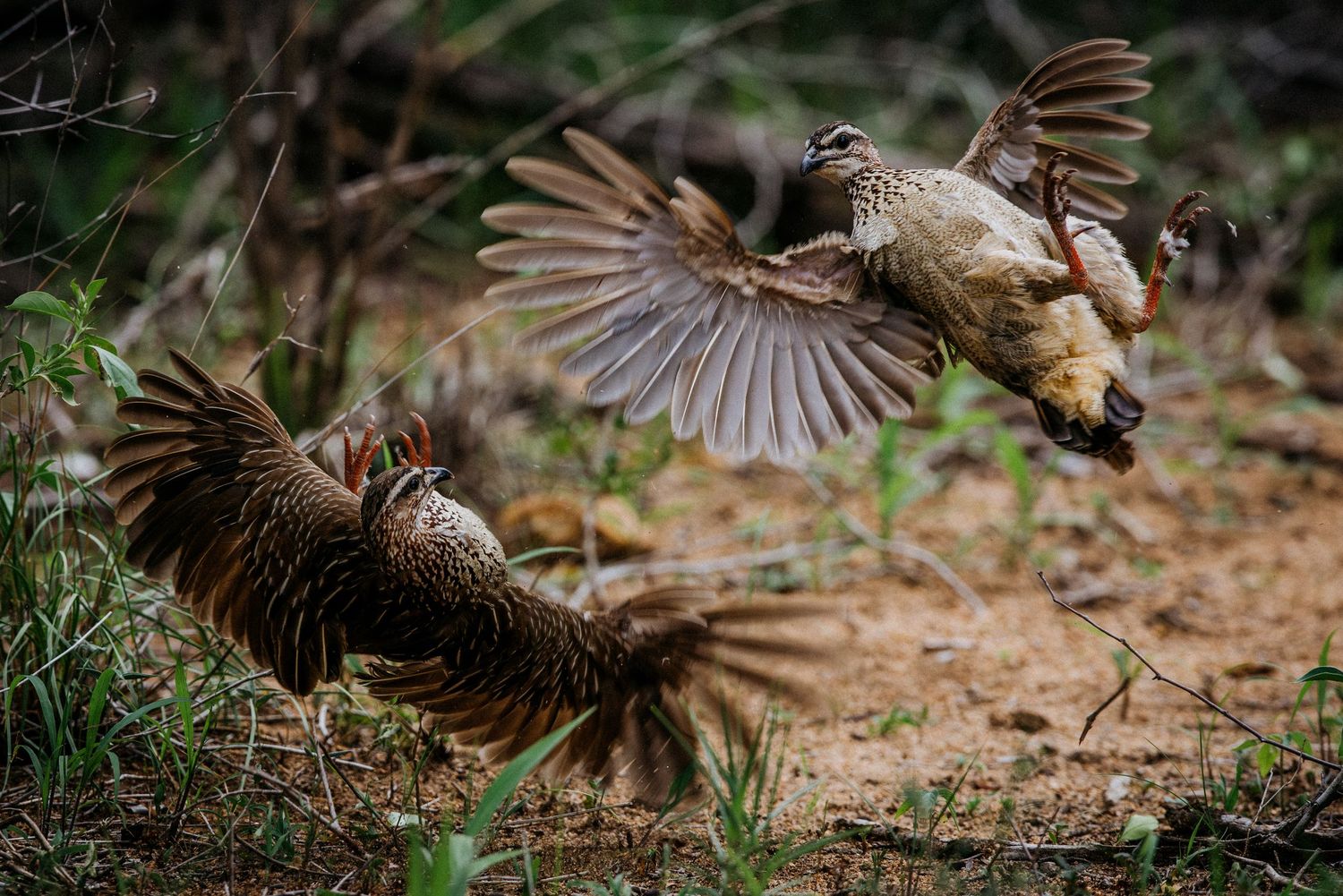
Two crested francolin fighting
A few things I always tell first-timers
Try to shoot wide before you shoot tight. The landscape behind the animal is part of the story, once you move closer that context is gone. Start wide, then work your way in.
Don't be afraid to push your ISO. A sharp frame at 3200 or 6400, beats a blurred one at 400 every time.
And don't overshoot. When something extraordinary is happening, make your frames, then put the camera down. Be in it and enjoy the moment.
📌 Most bush flights in Africa have a 15kg limit. My kit alone weighs around 17kg. When you travel with me I always secure a minimum of 30kg per person. It's one of the things I sort out before departure so you don't have to think about it.
The kit will change. It always does. But the question stays the same: what do I actually need to make the image I came for?
Sometimes the answer is nothing. Put the camera down. Let the place arrive. That is part of what we come for too.
Louis David leads photography expeditions in Africa and underwater. The next departure is Zambia, late October 2027.